Natural Dye Glossary
Alkaline
A solution is considered alkaline when its pH is above 7. In natural dyeing, alkaline conditions can influence how certain plant dyes develop and can be created by adding basic substances such as soda ash or calcium hydroxide.
Auxiliary
An auxiliary is an ingredient used alongside a dyestuff or mordant to influence the dyeing process. Auxiliaries may help adjust color, modify the dye bath, improve softness, or otherwise affect the final result.
Colorant
A colorant is the substance responsible for producing color. In natural dyeing, this may refer to the dyestuff itself or to the individual coloring compounds contained within a plant, mineral, or other natural material.
Color Shifting
Color shifting refers to changing the resulting color of a dye bath by altering its conditions, most commonly its pH. Some natural dyes respond dramatically to changes in acidity or alkalinity. Iron can also be used to shift a color toward deeper, darker, or grayer tones.
Crocking
Crocking is the transfer of dye from a dyed textile onto another surface through rubbing. Indigo and some other dyes may release loose surface color, particularly when a textile is newly dyed or has not been thoroughly rinsed.
Dye Extract
A dye extract is a concentrated form of a natural dyestuff, usually produced by extracting the color from plant material and then filtering, drying, and processing it into a powder. Extracts provide a more concentrated source of color than whole dyestuffs such as leaves, bark, flowers, berries, or wood.
Eco-Dyeing / Eco-Printing
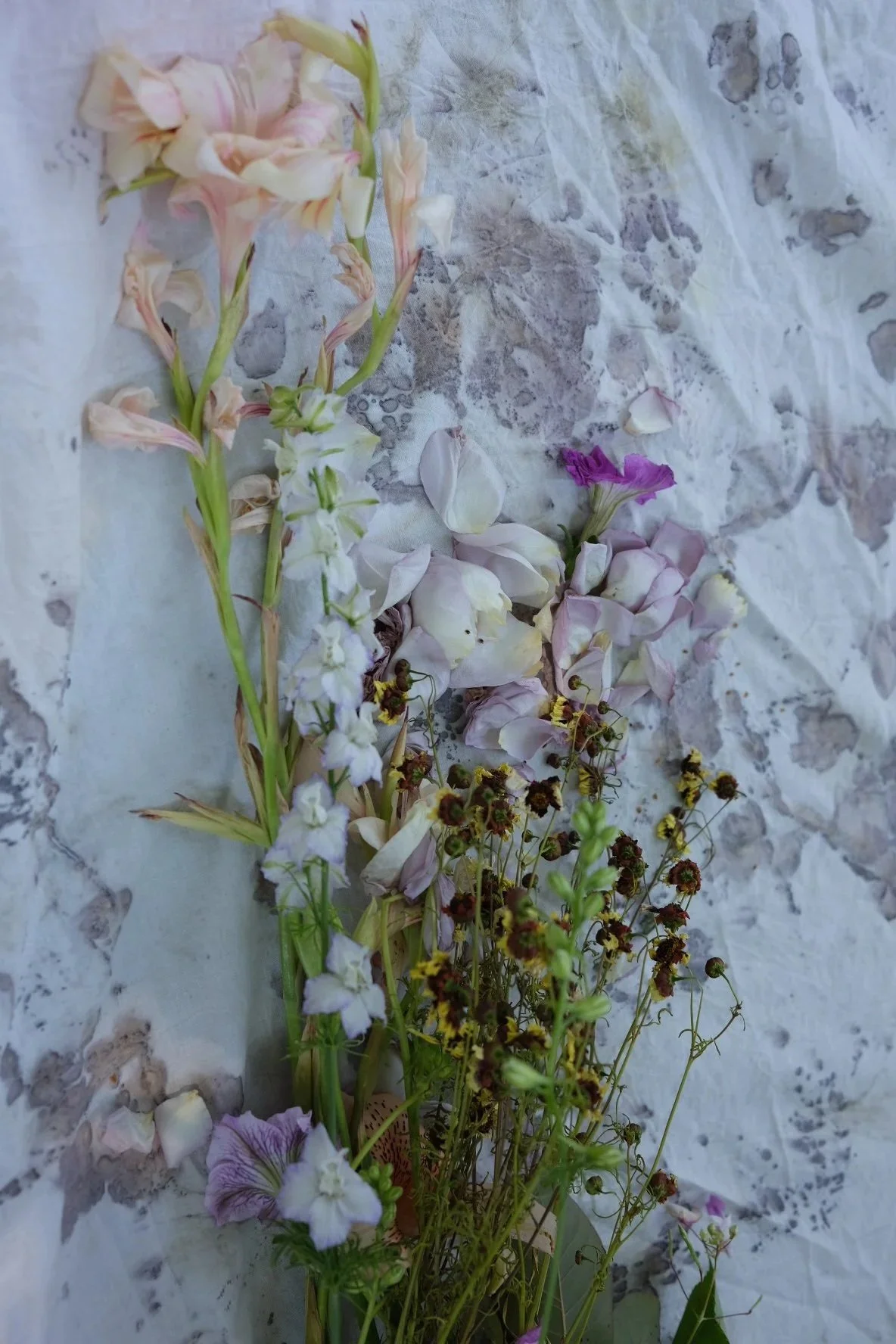
Eco-dyeing, sometimes called eco-printing, is a method in which plant materials are placed directly against prepared fabric and secured into a bundle or roll. Heat and moisture allow natural pigments and compounds to transfer onto the textile, creating impressions and patterns that reflect the shape and character of the original botanical material.
Exhaust Bath
An exhaust bath is the dye bath that remains after fibers have absorbed some or most of the available color. Rather than discarding the remaining liquid, it can often be used to dye additional fibers, creating lighter shades while making more efficient use of dyestuff, water, and energy.
Layering
Layering describes the process of gradually building color through repeated applications or dips. Indigo is a good example: several shorter dips can create a richer, deeper blue than a single dip. Allowing the fiber to oxidize between dips gives each layer an opportunity to develop before the next is added.
Lightfastness
Lightfastness describes how well a dyed color withstands exposure to light without fading or changing significantly. Different natural dyes have different levels of lightfastness, and the final result can also be influenced by the fiber, mordant, dyeing process, and conditions of use.
Mordanting
Mordanting is the preparation of textile fibers so that they can more effectively interact with certain natural dyes. A mordant is generally applied in a separate bath before dyeing, allowing it to bond with the fiber. For many natural dyes, proper mordanting helps improve color depth, durability, and resistance to fading.
Over-Reduced Vat
An over-reduced vat occurs when an indigo vat contains more reducing agent than necessary. Because the vat has very little available oxygen, it may need to be rebalanced by introducing air through stirring or agitation. Over-reduction is more common when using stronger chemical reducing agents and less common with some natural reducing systems.
pH
pH is a measurement of how acidic or alkaline a water-based solution is. The scale generally ranges from 1 to 14, with 7 considered neutral. Numbers below 7 indicate increasing acidity, while numbers above 7 indicate increasing alkalinity.
For the natural dyer, pH is an important tool for influencing color. Acids such as vinegar, citric acid, or cream of tartar can lower pH, while alkaline materials such as soda ash or calcium hydroxide can raise it. Because many natural colorants respond to pH, adjusting the dye bath can produce noticeably different shades.
Reducing Agent
A reducing agent is a substance that removes or limits oxygen within an indigo vat. Reduction changes indigo into a water-soluble form that can attach to the fiber. Once the fiber is removed from the vat and exposed to air, the indigo oxidizes and develops its characteristic blue color.
Scour
To scour a textile means to thoroughly clean the fiber before mordanting or dyeing. Scouring removes oils, dirt, waxes, processing residues, and other substances that may prevent a dye or mordant from reaching the fiber evenly. Depending on the material, scouring may involve a cleanser, soap, soda ash, and hot or near-boiling water.
Skein
A skein is a length of yarn that has been wound into a loose, continuous bundle or hank. Yarn is often sold and weighed in skeins, with 100 grams being a common size. The actual length of yarn in a skein depends on the thickness and type of fiber.
Tannins
Tannins are naturally occurring compounds found throughout many plants, including leaves, bark, roots, fruits, and other plant materials. They are often associated with an astringent or bitter quality. In natural dyeing, tannins are particularly useful when working with cellulose fibers and can interact with mordants such as iron to produce deep gray, brown, or blue-black tones.
Under-Reduced Vat
An under-reduced vat contains too much oxygen or not enough reducing agent for the indigo to remain in its reduced, soluble state. The vat may appear blue, teal, or cloudy rather than the expected yellow-green or golden-brown color. Adding additional reducing agent and allowing the vat time to rebalance may restore it. If the vat does not respond, the pH and other conditions should also be checked.
Vat vs. Stock Solution
In indigo dyeing, the vat is the larger container in which the fibers are immersed. An indigo stock solution is a concentrated preparation made separately and then added to the vat. The stock is mixed into the vat and allowed time to reduce and stabilize before dyeing begins.
Washfastness
Washfastness refers to a dyed textile’s ability to retain its color when washed. A highly washfast dye will resist fading, bleeding, or color loss during laundering, while a less washfast color may gradually change with repeated washing.
Weight of Fiber
Weight of Fiber (WOF) refers to the dry weight of the textile material being dyed. WOF provides a consistent reference point for calculating the amount of dyestuff, mordant, and other ingredients used in a dye recipe. For example, if a recipe calls for 10% dyestuff WOF and you are dyeing 100 grams of dry fiber, you would use 10 grams of dyestuff.