Types of Natural Dyeing
Natural dyeing encompasses many different techniques, from traditional immersion baths to slow fermentation and playful surface-design methods. The character of the finished color depends not only on the dye plant, but also on the fiber, mordant, water, temperature, time, and method of application.
Immersion Dyeing
The most traditional method of natural dyeing is immersion dyeing, in which fibers are submerged in a bath made from plant, mineral, or other natural dye materials. The dye material is usually simmered or steeped to extract its color before the prepared fiber is added.
Immersion dyeing can produce anything from pale, delicate shades to deep and saturated colors. Repeated dips, longer dye times, and layering different dyes can build depth and complexity.
Bundle Dyeing
Bundle dyeing creates concentrated areas of color and botanical marks directly on fabric. Flowers, leaves, roots, or other dye materials are arranged on prepared cloth, which is then tightly bundled, rolled, or folded and steamed or heated.
The placement of the botanicals becomes part of the design, creating organic shapes, halos, and unexpected variations. The result is often highly individual and difficult to reproduce exactly.
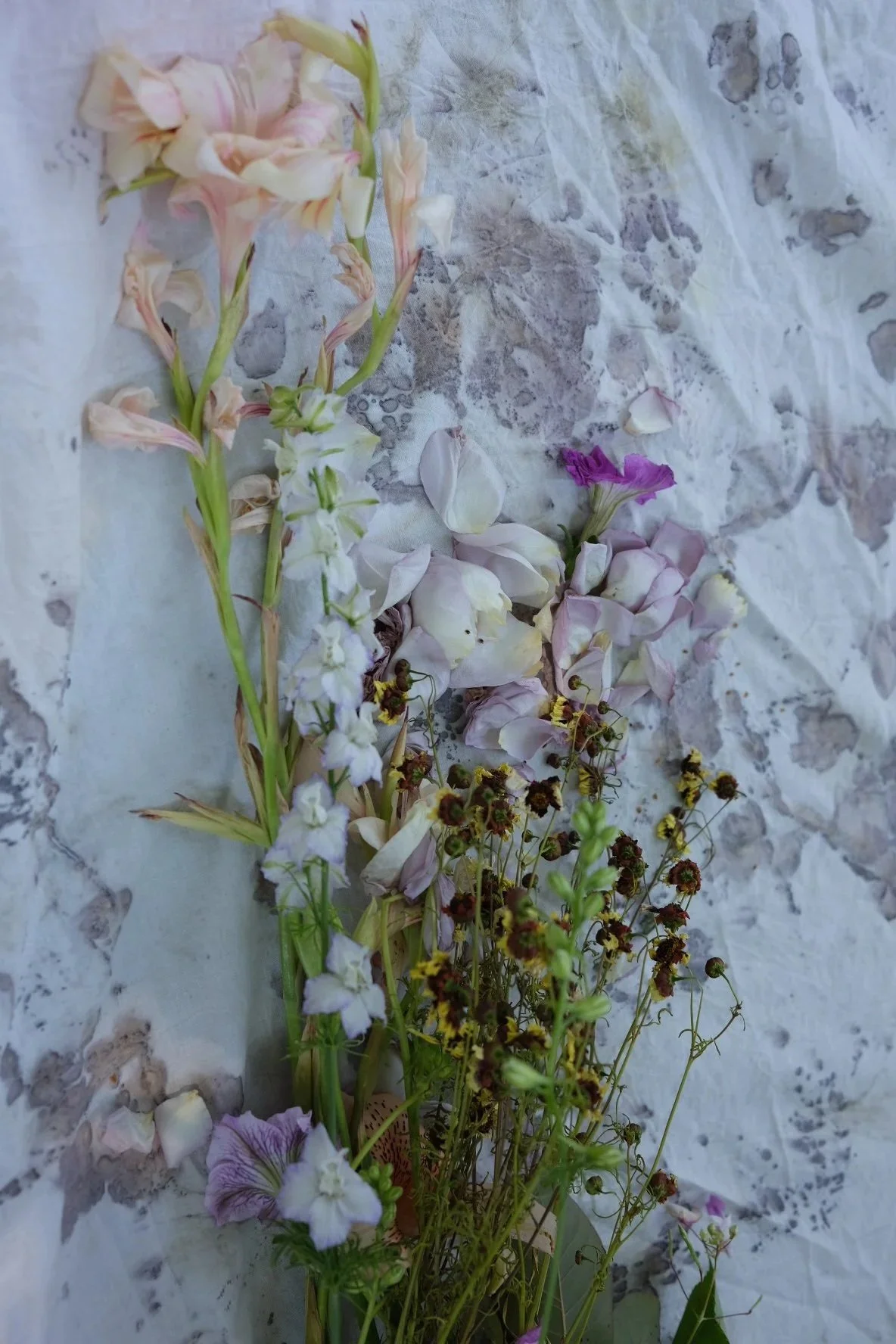
Eco-Printing
Eco-printing is a form of botanical dyeing in which plants are placed directly against fabric and heated, allowing their natural pigments and tannins to transfer onto the fiber.
Leaves, flowers, bark, and other plant materials can create recognizable silhouettes and subtle variations in color. The term is sometimes used interchangeably with botanical printing or bundle dyeing, although techniques vary.
Solar Dyeing
Solar dyeing uses the warmth and energy of the sun to slowly extract color from natural dye materials. Dye plants and prepared fibers are placed together in a jar or other container and left in sunlight for an extended period of time.
Unlike heated dye baths, solar dyeing is a slow and gentle process. Color develops gradually over days or weeks, often producing soft, nuanced shades. Temperature, sunlight, plant material, and time all influence the outcome.
Ice Dyeing
Ice dyeing uses melting ice to slowly dissolve and distribute natural dye material across fabric. Dye powders or prepared natural dye materials are placed over ice, which is positioned above or around the fabric. As the ice melts, the color travels through the cloth, creating areas of concentration and diffusion.
Ice dyeing produces highly organic, unpredictable patterns. Colors may separate into different tones as they move through the fabric, making each piece unique.
Indigo Dyeing
Indigo dyeing is fundamentally different from most natural dyeing because indigo is not simply extracted into a conventional dye bath. The pigment must be reduced, transforming it into a water-soluble form called indigo white.
Once the fiber is submerged in the reduced vat, it absorbs the soluble indigo. When the material is removed and exposed to oxygen, the indigo oxidizes and develops its characteristic blue.
Indigo dyeing is often built through repeated dips and oxidation periods. Each dip deepens the color, allowing the dyer to create anything from pale sky blue to rich, dark blue.
Fermentation Dyeing
Some natural dyes can be developed through fermentation, in which microorganisms and naturally occurring chemical processes help release or transform color. Fermentation methods are particularly associated with traditional dye practices and can require considerable time and careful observation.
The process may involve maintaining a specific temperature, pH, or fermentation environment. The resulting colors can have remarkable depth and variation.
Contact Dyeing
Contact dyeing refers broadly to techniques in which the dye material is placed directly against the fiber rather than being separated into a dye bath first. Bundle dyeing, botanical printing, and certain forms of ice dyeing can all be considered contact methods.
Because the plant material remains in direct contact with the cloth, these techniques often produce patterns, marks, and variations rather than an even field of color.
Overdyeing
Overdyeing is the process of dyeing an already-colored fiber with another natural dye. This can be used to deepen a color, shift its hue, or create entirely new colors.
For example, a yellow-dyed fabric can be overdyed with indigo to create greens. Overdyeing is one of the simplest ways to expand a natural dyer’s palette and create complex, layered colors.
Resist Dyeing
Resist dyeing uses a material or technique to prevent dye from reaching particular areas of the fabric. Folding, stitching, clamping, tying, waxing, or binding can create areas that remain lighter when the fabric is dyed.
Traditional resist techniques include shibori, tie-dye, and batik. Natural dyes can be used with these techniques to create patterns ranging from highly geometric to completely organic.
The Beauty of Natural Dyeing
Natural dyeing is as much about process as it is about color. Two dye baths made from the same plant may never produce exactly the same result. Season, soil, water, weather, plant maturity, fiber, mordant, temperature, and time all become part of the final color.
Rather than seeking perfect uniformity, natural dyeing invites us to work with these variations—to observe, experiment, and allow the materials to participate in the making.